Two workflows.
One Tuesday morning.
What the analyst already does. Compressed into the time between the print and the call.
Building a thesis from scratch in 20 minutes.
New thesis → paste two sentences (“BHTU is undervalued; tier shift compounds margin”). The workspace seeds ~30 starter cells in your shape — revenue lines by segment, opex bunches, working-capital scaffold, terminal stub. The first prompt is whatever you would have asked your model: “size the consumer segment assuming the tier mix shifts 200bps per year for three years.” The agent writes each cell back, the audit log fills, the DCF re-runs. From cold start to a defensible first draft in about 20 minutes.
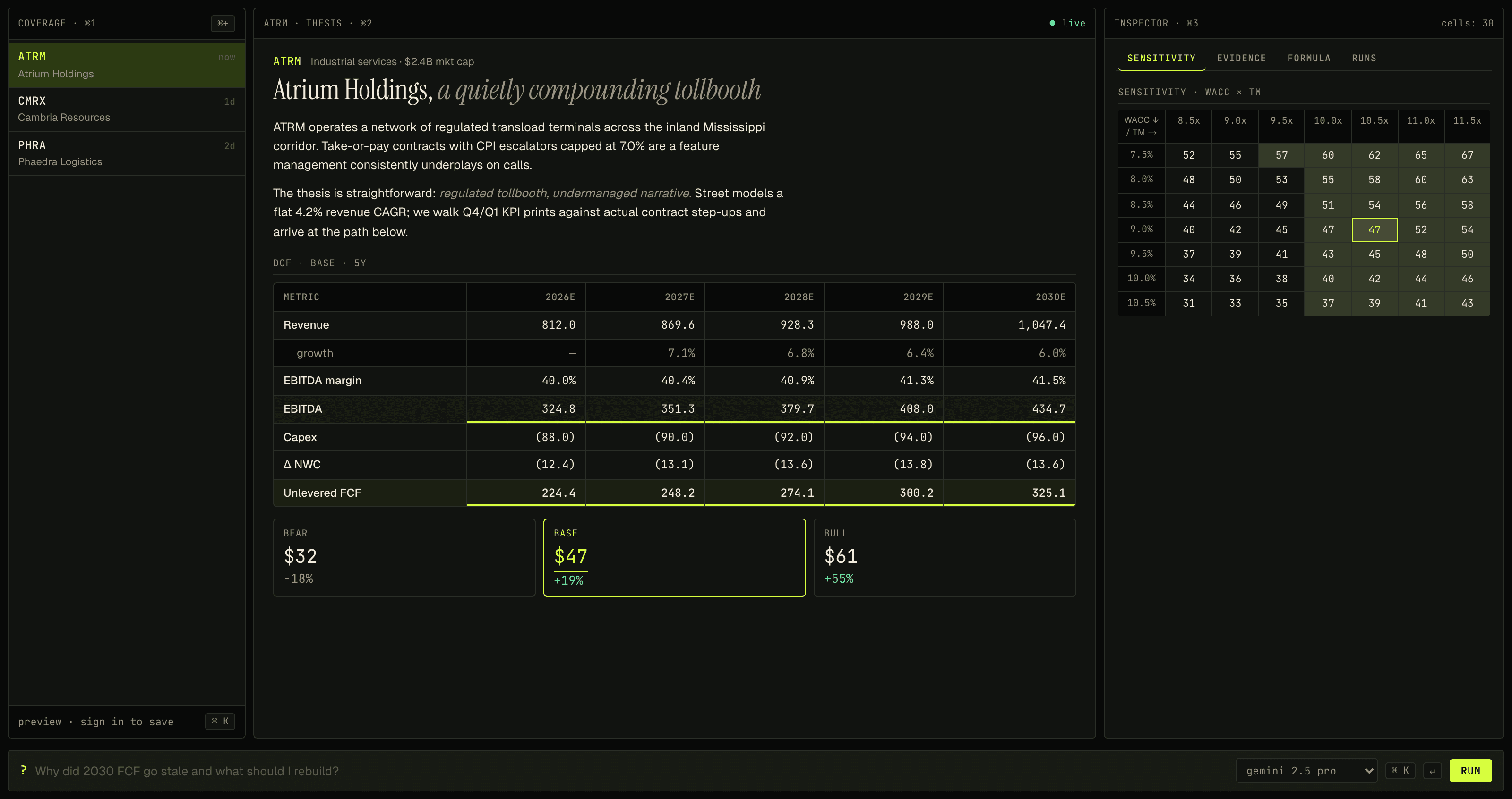
Re-running a DCF after the print.
Earnings hit. Paste the new revenue forecast and updated guide. The agent writes each period back into the model — every value lands a row in the audit log, so “what moved between yesterday's run and today's” is one query away. Then ask for the DCF re-run. Per-share NPV, WACC, terminal split — all back in cells, sensitivity grid refreshed inline. The chore that used to eat the morning is a few prompts and a sanity-check.
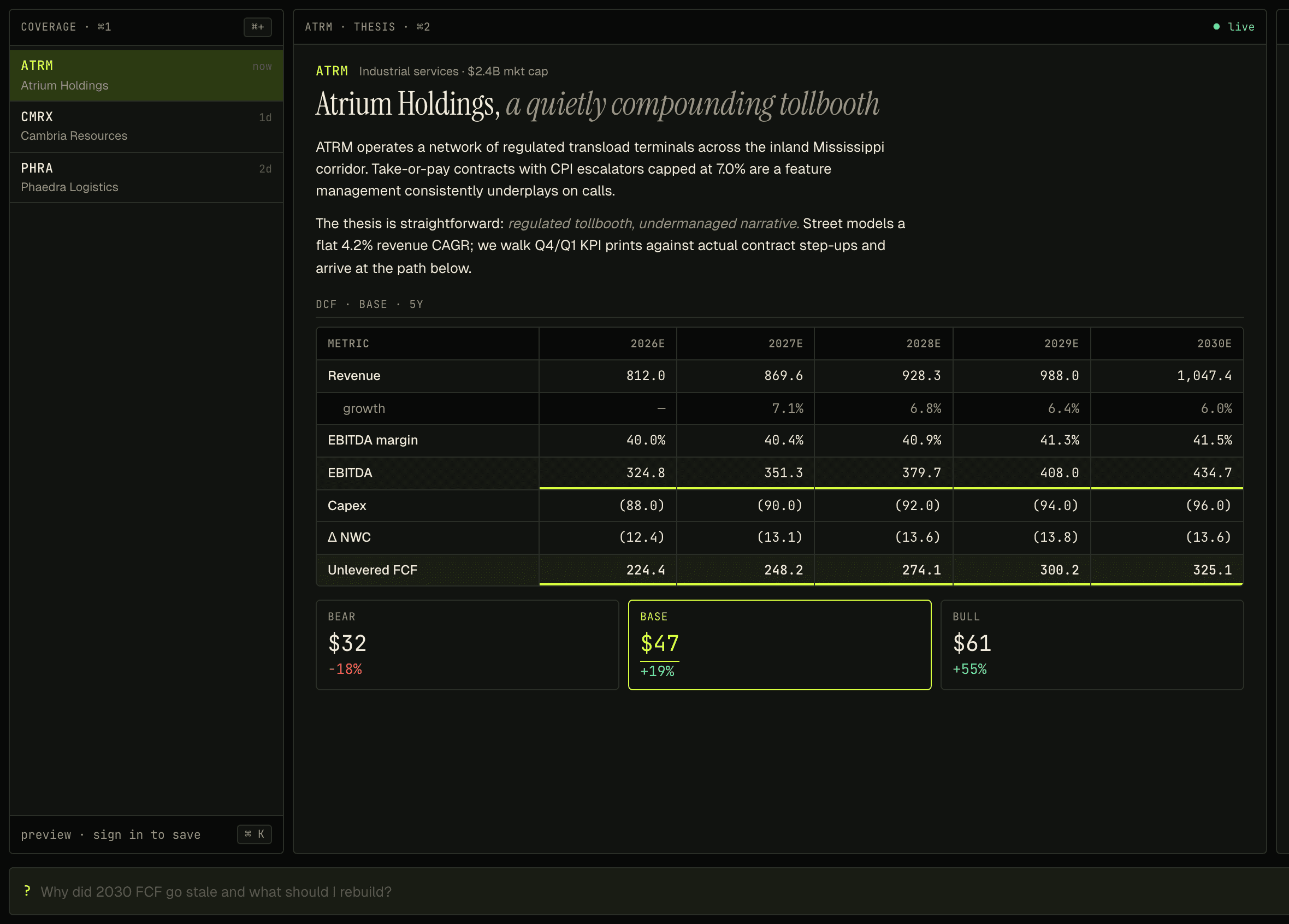
Print to PM’s inbox in 45 minutes.
- 7:00 AMPrint arrives.
- 7:15 AMForecast pasted into the model.
- 7:25 AMDCF re-run.
- 7:30 AMSensitivity refreshed.
- 7:45 AM.xlsx in the PM’s inbox.
The Sunday rebuild stops being a Sunday. The analyst gets the day back.
Read-only and unauthenticated. Cells, audit log, sensitivity grid — all real, all live.